Cartagena's tourism economy is dense and competitive. The Ciudad Amurallada draws millions of visitors annually, and the city and heritage tour segment — walking tours of the walled city, boat excursions to the Islas del Rosario, colonial history experiences — has more operators than any single traveler could book in a month. Standing out in this environment isn't primarily a marketing problem. It's a distribution problem: getting your product in front of the professional agencies and hotel desks that funnel the groups and pre-planned itinerary bookings that fill capacity systematically rather than one walk-in at a time.
This is the situation a Cartagena city and heritage tour operator — let's call them Muros Tours, a synthetic name representing the type of operator we're describing — faced when they reached out to us in late 2024. They had been operating since 2020, running quality guided experiences through the Ciudad Amurallada, Getsemaní, and the fortifications at Castillo San Felipe de Barajas. Direct bookings were solid. Their hotel partnerships had brought in referral business from concierge desks at two properties in El Centro. But the forward calendar was lumpy, peak season was consistently at capacity while shoulder months ran 40–55% occupancy, and every attempt to add distribution channels had stalled at the coordination problem: managing more than a handful of resellers by WhatsApp and email was becoming a second full-time job.
Where They Started
Muros Tours arrived at Tours Hub with three products: a 3-hour morning walking tour of the historic center, a 4-hour sunset fortification and panorama tour, and a half-day private charter to Isla Barú combining a guided cultural stop and beach time. All three had clear product identities and were well-reviewed by direct guests. What they lacked was the commercial infrastructure to sell systematically through professional channels.
Their rate structure was a single published price per person, adjusted informally depending on who was asking. Concierge desks at the hotels they worked with had a rough verbal understanding of what discount they'd receive for referrals. There was no written rate sheet, no defined net rate by product, and no commission structure that a new reseller could pick up and act on immediately.
The first step wasn't signing any resellers — it was building the product documentation that would let reseller conversations move efficiently. Three clean net-rate tables, one per product, organized by solo/pair, group of 3–6, and group 7+. Product sheets that led with the operational spec rather than the marketing narrative: guide-to-guest ratio, physical difficulty, minimum age, what happens in rain, what the cancellation window is. Three versions later — after iterating on what the first conversations with agencies actually asked for — they had materials that answered the questions resellers needed answered before they could quote.
The First Reseller Conversations
With materials in hand, the first structured outreach went to incoming agencies in Bogotá whose client profiles matched Muros Tours' product positioning — specifically, agencies that specialized in Colombia cultural itineraries for international clients (primarily North American and European) who would be spending 2–3 nights in Cartagena as part of a multi-city trip.
The initial response rate was modest. Some agencies expressed interest but had existing supplier relationships for Cartagena city tours. Others asked for a familiarization arrangement before committing. A few signed on quickly after a call, especially those who had been looking for a heritage-focused option with a smaller, more intimate group format than their existing suppliers offered.
The first three resellers activated through Tours Hub were a Bogotá incoming agency specializing in cultural group tours, a Medellín-based regional travel consultancy, and a Bogotá agency with a strong corporate and incentive travel practice who saw potential in Muros Tours' private charter product for corporate group use. Three very different client profiles, but each clearly matched to at least one product in the catalog.
The Coordination Breakthrough
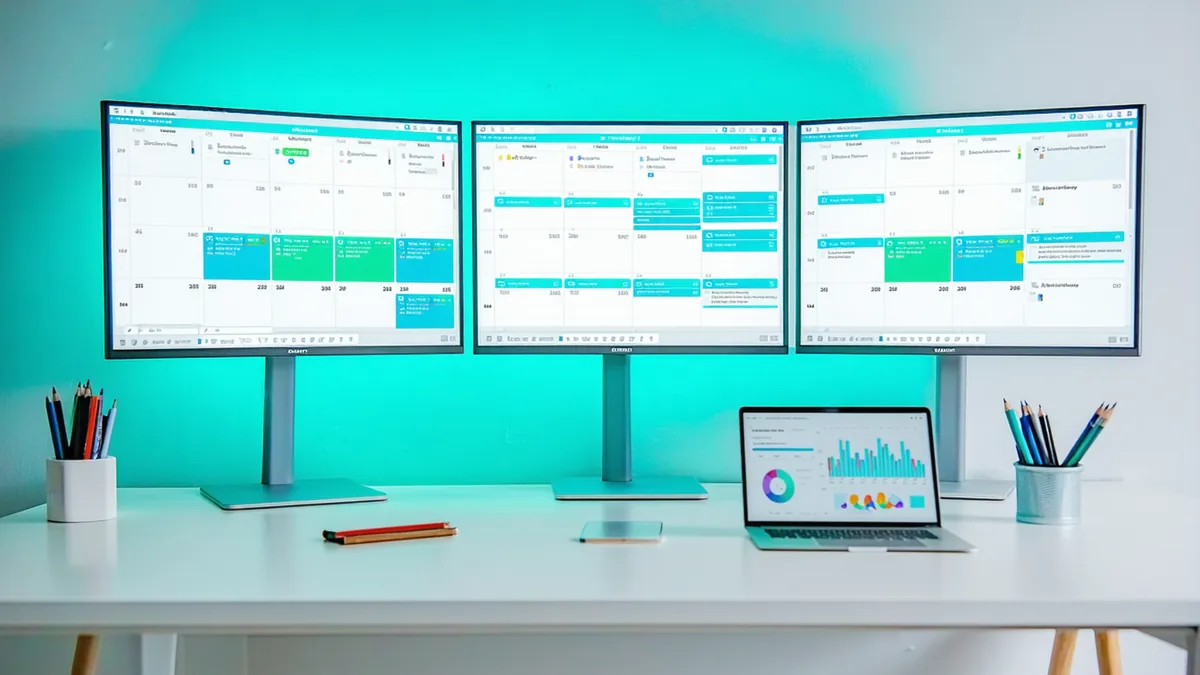
What changed operationally when the first resellers started using the platform rather than WhatsApp was the removal of the back-and-forth availability confirmation loop. The Bogotá incoming agency — which had historically been sending booking requests by message and waiting for manual confirmation — could now check live availability and confirm a booking without a phone call. The operator didn't need to take action until the booking appeared in their dashboard as confirmed.
This seems like a small operational change, but its effect on reseller behavior was significant. The agency started quoting Muros Tours products more proactively, because the confidence of confirming on the spot removed the hesitation of building it into a client quote before knowing if it was available. In the first two months, their booking volume through the platform was roughly double what it had been in the prior year when they were relying on manual confirmation.
The second operational shift was invoice consolidation. Instead of receiving separate invoices from Muros Tours at irregular intervals, resellers received consolidated monthly invoicing through the platform with transaction records they could reconcile directly. For the corporate agency in particular, this made Muros Tours much easier to work with from a finance team perspective — structured invoicing reduced the administrative friction that smaller operators with informal billing practices often create for agencies with proper accounting procedures.
Getting to 12 Reseller Channels
The first three resellers established the template. Over the following eight months, nine more followed. Not through a systematic outreach campaign, but through a combination of inbound interest from agencies that had heard about the operator from existing reseller partners, proactive outreach using the pattern that had worked with the first three, and two hotel partnerships that converted from concierge-desk referral arrangements to formalized reseller agreements with clean net rates and booking procedures.
The hotel partnerships deserve specific attention. Concierge desks at Cartagena hotels are a meaningful booking channel for day tours, particularly for high-end or boutique properties whose guests expect curated recommendations. But the informal nature of most hotel-operator concierge arrangements — a verbal agreement, cash tips, no invoicing — is fragile and doesn't scale. When Muros Tours offered the two hotel partners a formal reseller arrangement with clearly documented net rates and bi-weekly invoicing, both were receptive. The hotels' food and beverage managers preferred the structured arrangement for their own accounting, and the concierge staff found that having a formal relationship gave them more confidence in quoting the product to guests.
What Didn't Go Smoothly
The expansion wasn't without friction. One of the resellers signed in the second batch proved to be a poor fit — they booked the sunrise tour for a client group without reading the product spec carefully, missed the note about the 40-minute uphill walk component, and had a client complaint when the group included several participants who found the physical demands more than they'd expected. The situation resolved without a refund dispute, but it raised the question of whether the operator's product documentation was clear enough on physical requirements, and it led to a revision of the difficulty and suitability section of the product sheet.
This is a normal part of building a reseller network. The first incident that reveals a documentation gap is cheaper than the accumulated damage of the same gap playing out across multiple resellers without being addressed. Muros Tours updated the product spec within a week of the incident and sent the revised version to all active resellers. The response from the network was positive — agencies appreciated being sent updated materials proactively rather than having to ask.
Where They Are Now
Twelve active reseller channels, generating a meaningful share of total bookings across all three products. The forward calendar shows significantly more depth than a year ago — particularly in the shoulder months, where the incoming agency and hotel channels bring in bookings 30–60 days out rather than the 3–7 day booking window that characterized direct and walk-in demand.
The operator still manages their own direct booking website and values the guest relationships it creates. They're not trying to make resellers their exclusive channel. What changed is that their occupancy curve is flatter, their forward planning is more reliable, and the coordination work required to maintain twelve reseller relationships is a fraction of what the same twelve relationships would have required managed through individual WhatsApp threads.
The product itself hasn't changed. The distribution infrastructure around it has, and the occupancy data reflects it.